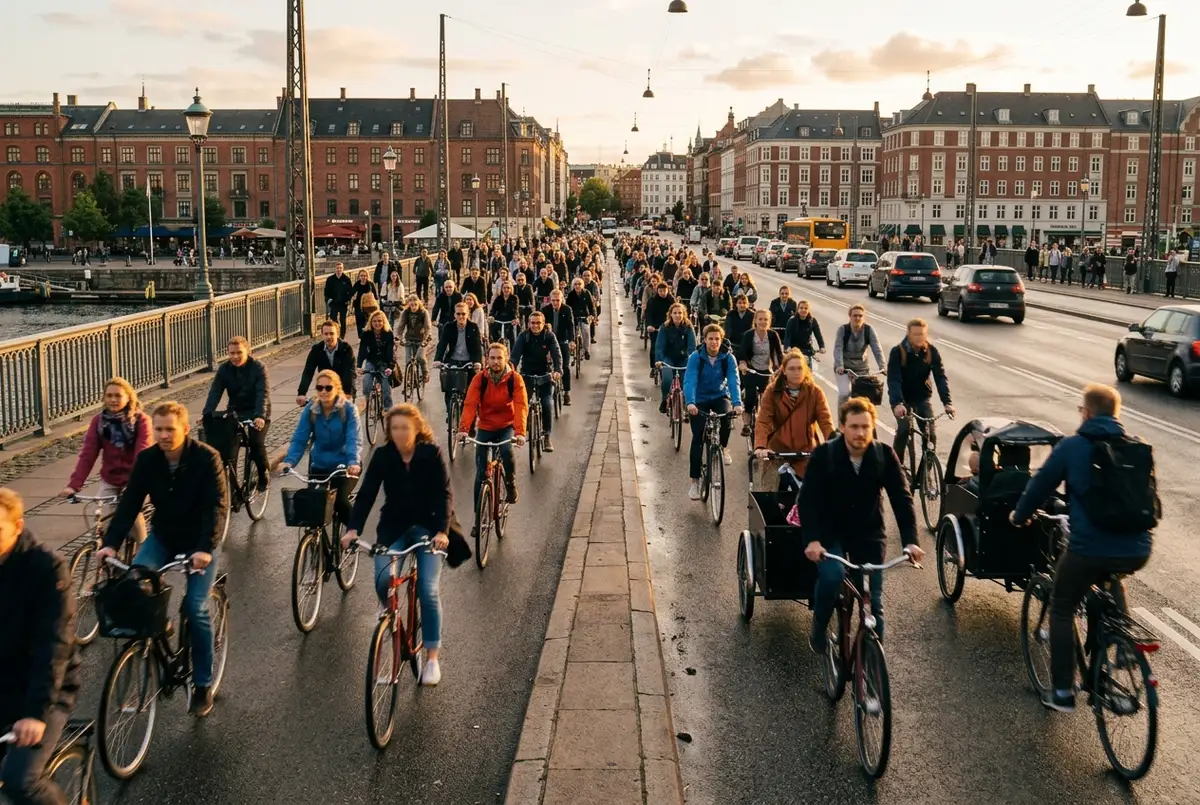
Cycling in Copenhagen is not a tourist activity bolted onto a city built for cars. It is the city’s actual transport system, with close to half of all trips to work or school happening by bike on a network of protected lanes, dedicated bridges and priority signals built up over five decades. Here is the honest version I would give a friend before their first visit: you do not need to study the system before you ride it, but understanding why it works the way it does changes how you experience every single day you spend here on two wheels. If you want to turn this into an actual day on a bike rather than just background reading, you can see how each of Copenhagen’s eight guided tours differs by duration and route before committing to one.
Why Does Copenhagen Have So Many Bicycles?
Copenhagen’s bike culture is not an accident of geography. It is the direct result of a 1970s oil crisis that pushed the city to rethink car-first planning, followed by decades of deliberate investment in protected lanes instead of wider roads. I would call this the single most important fact to know before you ride here: the infrastructure was built on purpose, which is why it feels so coherent compared to bike lanes bolted onto a car-first city as an afterthought.
The flat terrain helps too, and I would not pretend otherwise. There are no real hills to fight, so the physical barrier to cycling that exists in hillier capitals simply does not apply here. But flat land alone does not explain the scale of it. Plenty of flat cities still have low cycling rates, because the deciding factor is whether a government keeps funding separated lanes for fifty straight years rather than cutting the budget the moment car traffic complains. Copenhagen did not waver on that commitment, and the result is a city where riding a bike is the path of least resistance rather than an act of defiance against traffic.
What Do Visitors Get Wrong About This Culture Before They Arrive?
The most common mistake I see is assuming Copenhagen’s cycling culture is mainly aesthetic, a nice backdrop for photos rather than a functioning transport system. It is the opposite. Locals use bikes the way other cities use a subway, as the fastest and most reliable way to get somewhere on a weekday morning, which means the lanes carry real commuter urgency rather than leisurely sightseeing traffic. I would also flag a second, smaller misconception: visitors sometimes expect a bike-friendly city to mean a car-free one. Cars are still very much present on Copenhagen’s streets. What differs is that cyclists have their own protected space alongside them rather than sharing a painted lane with traffic moving twice as fast.
A third thing people get wrong is assuming the culture is limited to young, fit commuters. It is not. I would point out that elderly riders, parents hauling two or three children in a cargo bike, and office workers in full business clothes all use the same lanes without special gear, because the infrastructure removes most of the physical and safety barriers that make cycling feel risky or athletic elsewhere.
How Does Weather Affect Cycling Here Across the Year?
Less than you would expect, and that surprises almost every first-time visitor. Danish cyclists ride through rain, wind and genuinely cold winter mornings at rates that would stop most commuters elsewhere, mainly because the infrastructure, good lighting, clear priority at junctions, snow clearing on major cycle routes, stays functional across seasons rather than disappearing the moment the weather turns. I would still pack a proper rain layer if you are visiting outside summer, since the lanes staying open does not mean the ride stays comfortable without the right gear. Wind off the harbor is the detail most guides skip entirely, and I would take it seriously on an open stretch near the water, where a strong crosswind can genuinely push a loaded bike or basket sideways.
What Role Do Cargo Bikes Play in This Culture Specifically?
A bigger one than most visitors expect. The iconic Christiania-style three-wheeled cargo bike is not a novelty item here; it is how a large share of Copenhagen families actually move their kids, groceries and gear around the city on an ordinary day. Seeing one is not a photo opportunity so much as a glimpse of how an entire category of car trips, the school run, the weekly shop, simply got replaced by a bike built for the job. I would watch for how casually locals handle these bikes in tight traffic. It takes practice to steer one well, and seeing a parent do it one-handed while talking on the phone is a small, honest window into how normalized this transport mode really is here.
What Does “Half the City Cycles” Actually Look Like on the Street?
It looks like a genuine rush hour, not a scattering of enthusiasts. At peak commuting times, the main cycle tracks carry a dense, fast-moving stream of riders who expect predictable behavior from everyone around them, tourists included. I would not treat a Copenhagen bike lane like a quiet park path. Locals ride at a brisk, purposeful pace, and the unspoken expectation is that you match it or move to the side rather than wobble down the middle of the lane taking photos.
Is Copenhagen’s Cycling Infrastructure Actually Different From Other Cities?
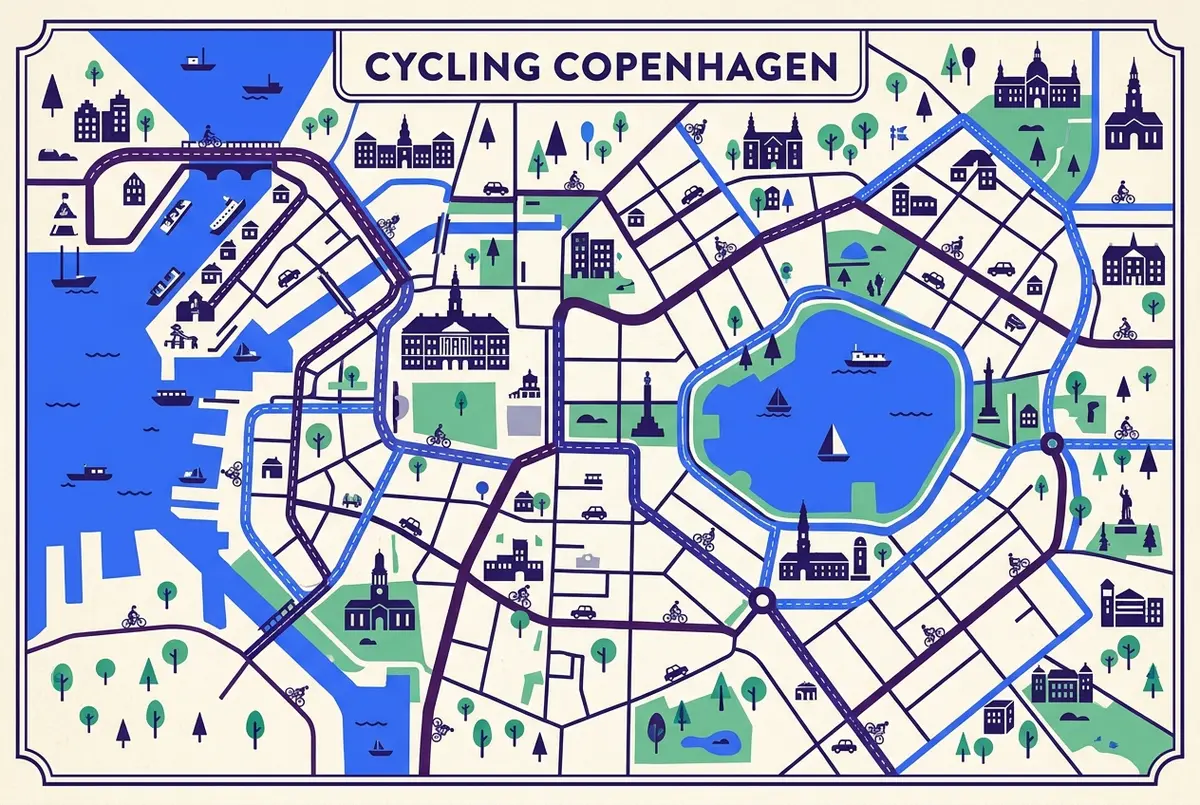
Yes, meaningfully so. My deep dive into Copenhagen’s bike lanes, bridges and rules covers the raised cycle tracks, dedicated bike bridges like Cykelslangen, and the priority signals that give cyclists a head start at many intersections. I would read that guide before your first ride if you have never cycled somewhere with infrastructure this deliberate, because a few of the rules genuinely differ from what cyclists in most other cities are used to.
How Did This Cycling Culture Actually Develop Over Time?
The story runs from near-total car dominance in the mid-20th century, through protest movements and oil shocks in the 1970s, to a sustained multi-decade investment plan that most cities never commit to for long enough to see results. My history of cycling in Copenhagen traces that full arc in detail. I would call this the page to read if you want to actually understand why this city looks the way it does, rather than just accepting it as a quirky fact.
Is Copenhagen Actually Worth Visiting Because of This, or Is That Overstated?
It is a genuinely honest part of the case for visiting, not marketing spin. My is Copenhagen worth visiting guide weighs the cycling-city angle against real costs like food and lodging, since a bike-friendly city still has a price tag attached to everything else. I would not oversell this. Free and easy movement around the city is real, but it does not make the whole trip budget friendly on its own.
Can You Build a Whole Denmark Trip Around Cycling, Not Just a City Visit?
You can, and a growing number of visitors do exactly that. My cycling holidays in Denmark guide covers where Copenhagen fits as the start or base of a longer, multi-day cycling trip across the country’s coastal routes and islands. I would treat Copenhagen as the warm-up leg if that is your plan, since the city’s gentle, flat lanes are the easiest possible introduction before tackling longer rural stretches.
What If You’re Cycling Here From Somewhere Else in Europe?
A small but real segment of visitors arrive on their own bike, having ridden here from Germany or further afield. My cycling to Copenhagen from Berlin guide covers that specific route for anyone treating the city as a destination to ride into rather than fly into. I would not attempt that route without real touring experience first, but for those who have it, arriving by bike is a genuinely memorable way to see the country change along the way.
Is There an Actual Visual Style to Copenhagen Cycling, or Is “Cycle Chic” Just a Phrase?
It is a real, photographed phenomenon, not just a marketing term. My Copenhagen cycle chic guide covers how ordinary commuting here turned into a recognizable style, mostly because riding in regular clothes at a relaxed pace is simply normal when the infrastructure removes the need for sportswear and separate gear. I would notice this on your first ride: nobody here treats cycling as a performance activity, which is part of what makes the whole system feel so approachable to a visitor.
What Should a First-Time Visitor Actually Know Before Riding Here?
A handful of unwritten rules make the biggest difference: signal before you turn, never stop in the middle of a lane, and keep right unless you are actively passing someone. My cycling tips for first-time visitors guide covers the full list in more depth. I would read that one guide even if you skip every other cluster page here, since it covers the etiquette that keeps a first ride from feeling intimidating.
Does the City’s Calendar Affect How Crowded the Bike Lanes Get?
Yes, noticeably. My cycling events in Copenhagen guide covers organized rides, races and festivals that temporarily reshape traffic on certain routes throughout the year. I would check that calendar against your travel dates if you want either to join one of these events or deliberately avoid the crowding they bring to specific streets on a given weekend.
Can You Cycle Out of the City for a Day Without Leaving the Country?
Absolutely, and it is one of the more underrated things to do here. My best cycling day trips from Copenhagen guide covers single-day rides out to Dyrehaven’s deer park and the nearby coast, distinct from a multi-day Denmark-wide cycling holiday by scope alone. I would set aside at least one day for this if your trip runs five days or longer. It is a genuinely different side of the city’s cycling culture than the center ever shows you.
Why Does Any of This Matter If You’re Only Here for a Few Days?
Because it changes how you should spend those days, not just how you get between them. A city built around cycling tends to put its best neighborhoods, cafes and viewpoints within an easy ride of each other rather than spread across a transit map designed for cars and buses. I would plan a short Copenhagen trip around short bike hops between a handful of neighborhoods rather than a single long walking loop, since the distances that feel long on foot collapse into a ten or fifteen minute ride once you are on two wheels. The flip side is honesty about limits: a few days is not enough time to internalize every local rule and hand signal, which is exactly why a guided ride on day one, where someone else reads the lanes for you, tends to pay off more for a short visit than a longer one.
How Does This Compare to Other Cities Often Called Bike Friendly?
Amsterdam is the other city that comes up constantly in this comparison, and I would not pretend they are identical. Both cities commit seriously to cycling infrastructure, but Copenhagen’s lanes tend to run wider and more consistently separated from car traffic along major routes, while Amsterdam’s older street grid forces more compromises between bikes, trams and pedestrians in its historic core. Cities in North America or the UK that market themselves as bike friendly usually mean something much smaller: a painted lane here, a bike share dock there, without the decades of continuous, connected investment that makes Copenhagen’s network function as a single coherent system rather than a patchwork. I would treat that distinction as the real takeaway, since it explains why riding here feels so much less stressful than cycling in a city that has only recently started taking it seriously.
How Does This Culture Actually Connect to Renting a Bike Yourself?
Everything above describes the system you will be riding inside the moment you pick up a rental. My Copenhagen bike rental guide covers the practical side, prices, companies and bike types, once you are ready to move from reading about the culture to actually joining it. I would not overthink the gap between the two. Understanding the system for ten minutes before you rent makes the first ride noticeably less stressful.
What’s the Honest Takeaway Here?
Copenhagen’s cycling culture is the real reason the city feels the way it does to a visitor on foot or on a bike, and I would not treat it as a side detail to your trip. It shapes the pace of the streets, the quiet of the traffic compared to most capitals, and the ease of getting from a museum to a harbor without a car or a ticket machine in sight. My honest recommendation: spend your first hour here just watching the lanes before you ride them, because understanding the rhythm this city moves at makes every day afterward easier, whether you are on a rented bike, a guided tour, or simply walking alongside it.
I would also push back gently on the idea that you need to become a confident cyclist to enjoy any of this. Plenty of visitors experience Copenhagen’s cycling culture mostly as pedestrians, standing at a junction watching a wave of commuters flow past on their way to work, and that alone tells you something real about how this city organizes itself that no museum exhibit quite captures. If you do decide to get on a bike yourself, even for one afternoon, I think it is worth doing regardless of how the rest of your trip is planned. It is one of the few things about Copenhagen that is genuinely hard to understand secondhand, through a photo or a guidebook paragraph, and much easier to understand the moment the lane opens up in front of you and the city’s actual rhythm becomes obvious.
Frequently Asked Questions
Do I need cycling experience to ride in Copenhagen as a tourist?
No. The lanes are wide, flat and separated from car traffic, and the city’s gentle grades mean the physical demand is low even for someone who has not cycled regularly in years.
Is it true that half of Copenhagen commutes by bike?
Roughly, yes, for trips to work or school within the city, though the exact figure shifts slightly year to year depending on the season and the survey.
What makes Copenhagen different from other famously bike-friendly cities?
The scale and age of the investment. Copenhagen has been building protected, connected cycling infrastructure continuously since the 1970s, which is longer and more consistent than most comparable cities.
Can I experience Copenhagen’s cycling culture without renting a bike myself?
Yes, a guided bike tour puts you inside the same lanes and traffic flow without requiring you to navigate or plan the route yourself, which is a reasonable middle ground for a short visit.
For the national context behind all of this, the Cycling in Denmark Wikipedia page covers the broader infrastructure and policy history that Copenhagen’s own system grew out of.
Ready to see it from the saddle instead of just reading about it? Book the Copenhagen Highlights Bike Tour from EUR 53 and ride through the exact lanes and bridges this guide describes, with someone else handling the navigation.
copenhagen bike tour options, compared by route →