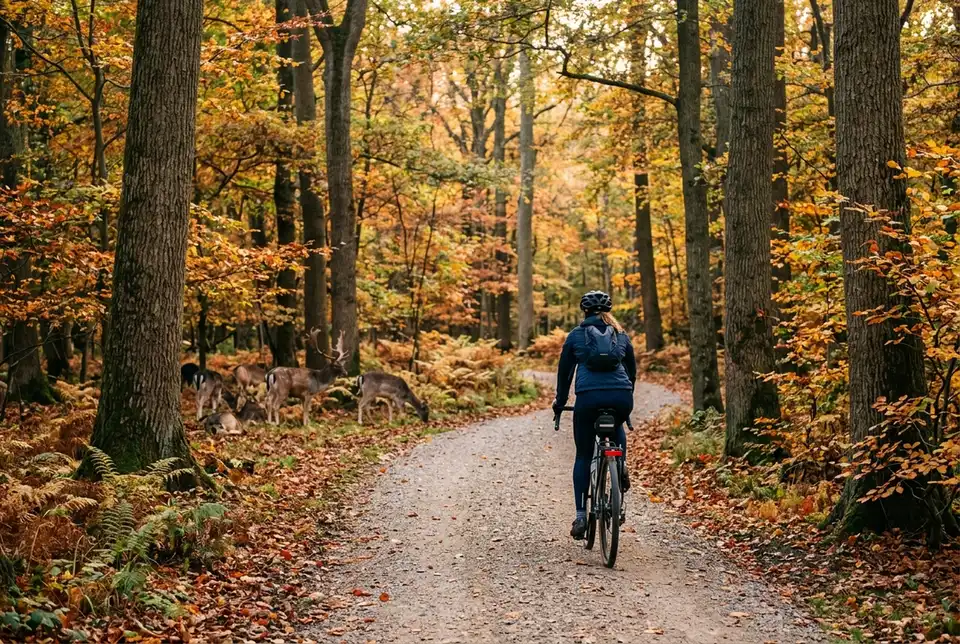
Bike day trips from Copenhagen cover more ground than most visitors realize once they step outside the city center: a royal deer forest to the north, a cobbled fishing village to the south, and a flat coastline connecting both. I would treat these as the reward for anyone who already has a day or two of city sightseeing behind them, since they trade landmark density for open space and a genuinely different pace. None of them need a car, a train ticket, or much more than a rented bike and a few free hours.
What Are the Best Bike Day Trips from Copenhagen?
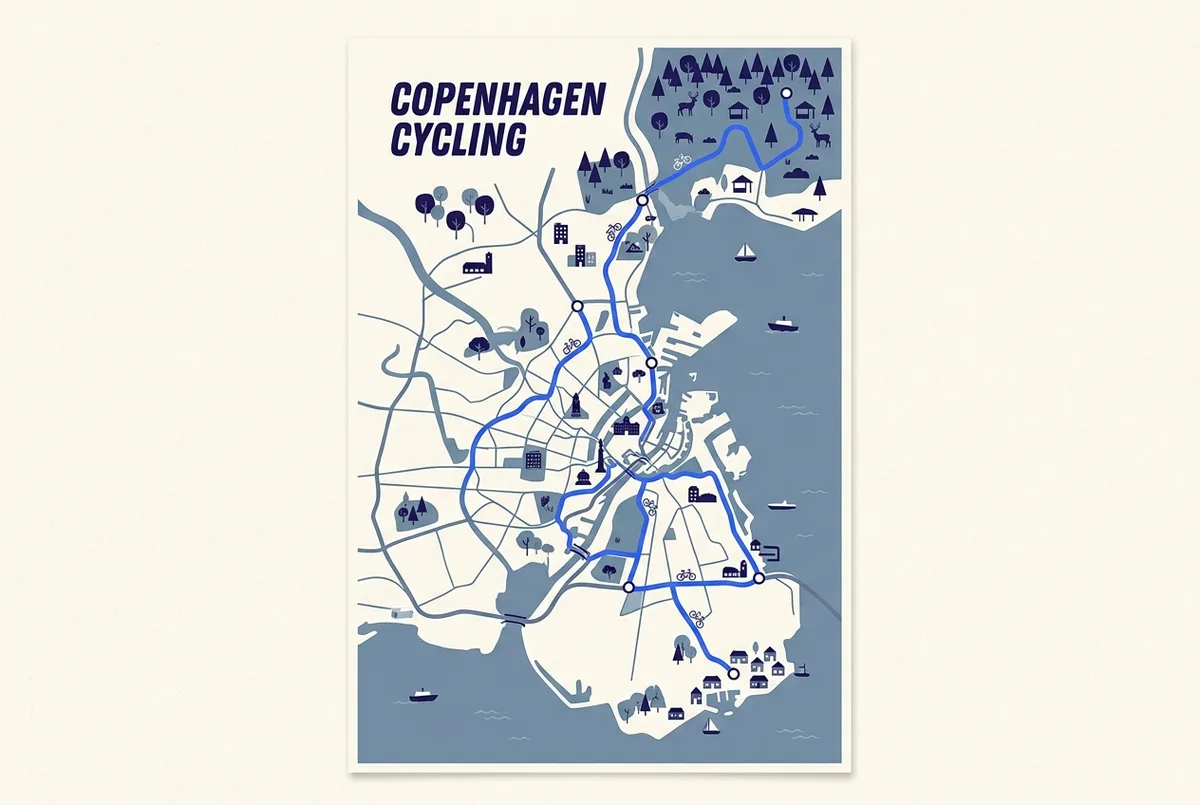
The two standouts are Dyrehaven, a centuries-old royal hunting forest about 13km north of the city with wild deer roaming its paths, and Dragør, a preserved fishing village roughly 12km south with cobbled lanes and a working harbor. Both sit on flat, mostly separated cycling infrastructure, so neither trip demands more fitness than a confident city rider already has.
How Far Is Dyrehaven from Copenhagen by Bike?
Dyrehaven sits about 13km from central Copenhagen, reachable along the coastal cycle route through Hellerup and Charlottenlund in roughly 45 to 60 minutes at a relaxed pace. I would budget closer to an hour each way rather than rushing it, since the coastal stretch itself, with harbor views and quiet residential streets, is part of what makes the ride worth doing rather than just a commute to the real destination.
What Makes Dyrehaven Worth a Full Day on a Bike?
Dyrehaven is a genuinely old royal hunting ground, still home to free-roaming red, fallow and sika deer along miles of forest paths. I would set aside a full afternoon here rather than a quick loop, because the appeal is the slow pace of weaving between open meadows and tree cover while watching for deer, not covering distance. The park also borders Bellevue Beach and Bakken, widely described as the world’s oldest operating amusement park, so a single visit can mix forest, coastline and a bit of old-fashioned fairground nostalgia without a second trip out.
Is Dragør Worth the Ride Out to the Coast?
I think it is, especially if Dyrehaven’s forest doesn’t appeal to you as much as a village with actual streets to wander. Dragør’s yellow and ochre houses, narrow cobbled lanes and small fishing harbor feel genuinely distinct from central Copenhagen, closer to an open-air museum that still functions as a real town. The ride down follows a mostly flat coastal route past Amager Beach Park, which I would treat as a reasonable rest stop roughly halfway through either direction.
What About Mountain Biking Near Copenhagen?
Central Copenhagen itself is flat pavement and purpose-built cycle tracks, not singletrack, so mountain biking copenhagen searches usually mean the wooded trail networks just outside the city, Dyrehaven’s unpaved forest paths among them, along with Hareskoven further northwest. I would not expect technical terrain here. Denmark’s geography keeps even the “off road” options gentle compared to mountain biking elsewhere, which actually makes these trails a reasonable choice for a rider who wants dirt underfoot without serious climbing.
Planning Your Day Trip: Distances, Timing and What to Pack
Both main routes run 12 to 15km one way, so a round trip lands somewhere between 24 and 30km depending on how much you wander once you arrive. I would start by mid-morning at the latest, since Denmark’s daylight shrinks fast outside summer and neither route has much lighting once you leave the city’s own cycle tracks. Pack a light rain layer regardless of the forecast, bring water and a snack since neither Dyrehaven nor Dragør has dense food options right at the trailhead, and check tire pressure before you leave: a slow leak twelve kilometers from a bike shop is a worse problem out here than it is downtown.
Should You Ride There Yourself or Book a Guided Route?
This is a real trade-off, not just a preference. A self-planned ride costs less and lets you linger exactly where you want, but it also means you are navigating, pacing the group and reading the weather yourself with no local knowledge of which paths flood after rain or close early in winter. I would book the guided Copenhagen Deer Park Bike Tour for Dyrehaven specifically, since it folds the city’s own highlights into the same outing, uses a short train hop to Klampenborg to save your legs, and takes the guesswork out of exactly where the deer tend to be. For Dragør, where the route is simpler and the main draw is just wandering the village, riding it yourself makes more sense.
How Is a Day Trip Different from a Longer Denmark Cycling Holiday?
Scope is the whole difference. A day trip gets you back to your Copenhagen hotel by evening on a single rented bike with no logistics beyond the ride itself. My cycling holidays in Denmark guide covers the multi-day version: island hopping by bike and ferry, overnight stops, and Copenhagen as a starting point rather than a round-trip base. I would not mix the two plans. Trying to stretch a day-trip route into an overnight commitment usually just means carrying luggage you didn’t plan for.
Why Do People Searching for a “Day Trip” Sometimes Mean Something Longer?
Because the phrase gets used loosely online, and some of what ranks for it is really about multi-day touring. If you are specifically arriving from, or continuing on to, another country by bike rather than looping back to the city the same evening, my cycling to Copenhagen from Berlin guide covers that longer route and the ferry crossings involved. I would check which version of the question you are actually asking before committing a whole day’s plan to the wrong distance.
Which Day Trip Should You Actually Pick?
If you only have time for one, I would pick Dyrehaven. Wild deer in an old royal forest is a genuinely different experience from anything the city center offers, and the Bellevue Beach and Bakken stops nearby mean you are not riding out for a single, narrow attraction. Dragør earns a second trip if your schedule allows it, especially for anyone who prefers wandering a historic village over forest paths. Either way, I would not attempt both in a single day unless you are an experienced rider comfortable with 40km or more of total riding, since rushing either one defeats the point of leaving the city center in the first place.
Before heading out, my cycling tips for first-time visitors guide and the practical rules in is Copenhagen worth visiting are both worth a quick read, since the hand signals and lane etiquette that work downtown apply just as much on a quiet coastal path. If a rental bike with a flat tire or a missing bell is holding up your plans for the day, bikes on Copenhagen’s Metro and S-trains are also an option worth knowing about through my taking a bike on the Metro guide, in case you would rather train partway and cycle the rest.
Frequently Asked Questions
How far is Dyrehaven from central Copenhagen by bike?
About 13km along the coastal cycle route through Hellerup and Charlottenlund, roughly 45 to 60 minutes each way at a relaxed pace.
Is Dragør a good bike day trip from Copenhagen?
Yes. It sits about 12km south of the city, reachable on a flat coastal route, and its cobbled streets and fishing harbor feel genuinely distinct from the capital.
Do I need a mountain bike for trails near Copenhagen?
No. Denmark’s flat geography keeps even unpaved forest paths like Dyrehaven’s gentle, so a standard rental bike handles them fine.
Can I combine Dyrehaven and the city’s main sights in one trip?
Yes, the guided Deer Park tour does exactly that, pairing the city’s classic landmarks with the forest and a train hop to Klampenborg in one outing.
For the park’s own history, the Wikipedia entry for Jægersborg Dyrehave covers its centuries as a royal hunting ground in more depth.
Ready to see Dyrehaven’s deer and the city’s highlights in one ride? Book the Copenhagen Deer Park Bike Tour from EUR 67 and let a local guide handle the route, the train hop and the timing.
see every Copenhagen bike tour sorted by route →