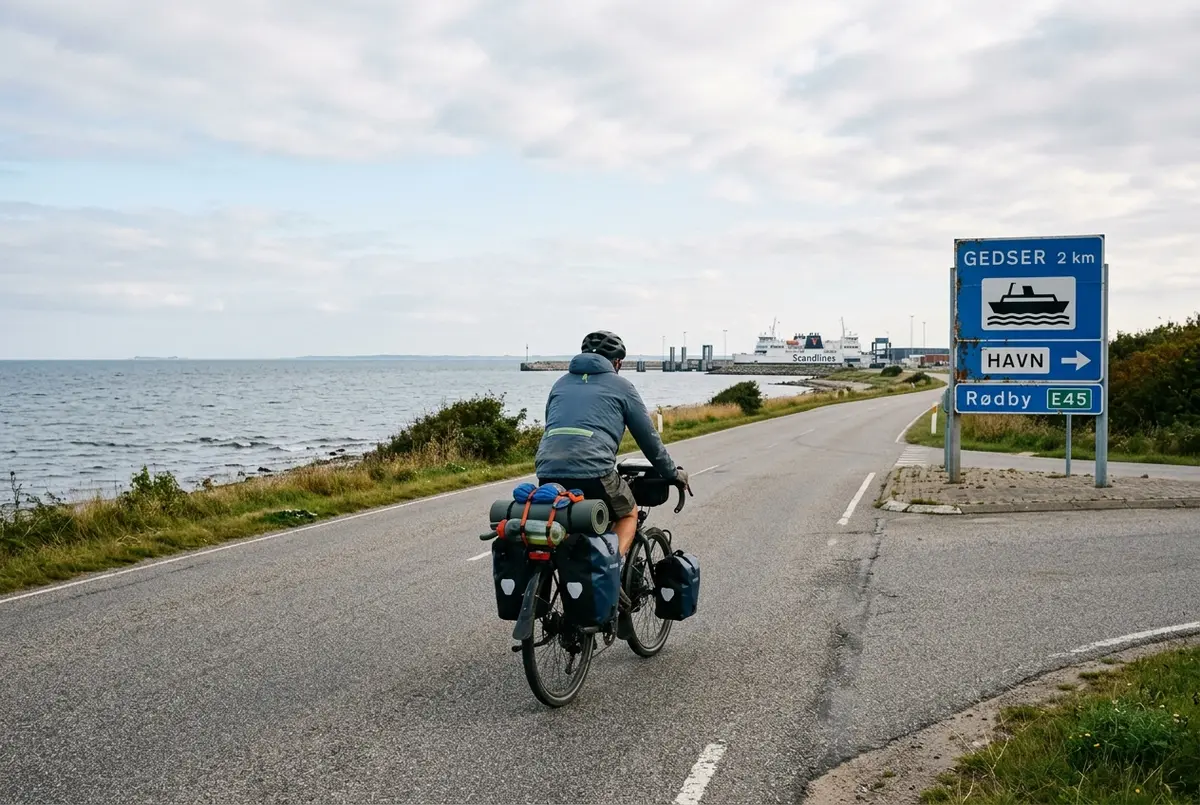
Cycling to Copenhagen from Berlin is not a stunt, it’s a well-worn touring route that several thousand cyclists ride every summer, and it is genuinely doable for anyone comfortable riding 50 to 70 km a day on flat to gently rolling terrain. If you’re new to what makes the destination itself worth the ride, my broader guide to cycling in Copenhagen is worth a read before you set out. Here’s what I would actually plan for: a route of around 300 km split over roughly 4 to 7 days, one ferry crossing that breaks up the ride nicely, and almost no hills worth mentioning until you’re practically in the city.
How Do You Actually Cycle from Berlin to Copenhagen?
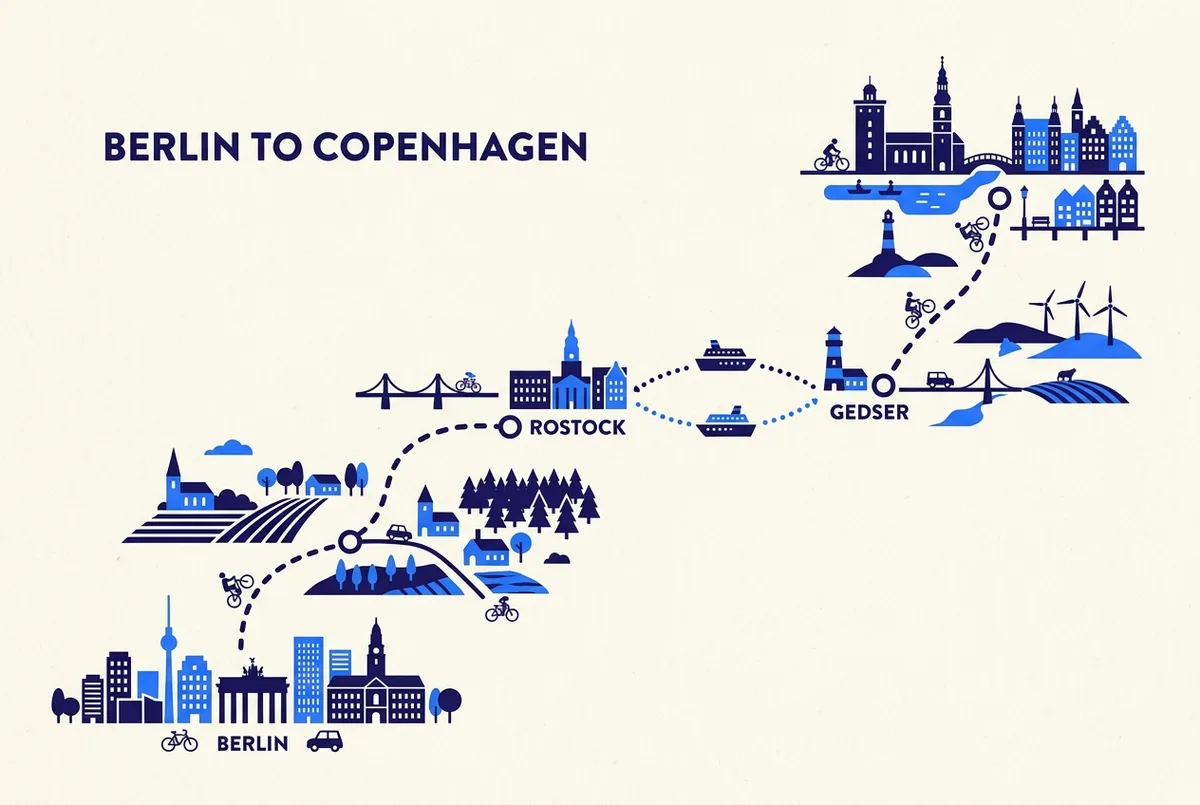
The standard route runs north out of Berlin through Brandenburg and Mecklenburg-Vorpommern to the German port city of Rostock, then a ferry across to Gedser on Denmark’s southern tip, followed by a ride north through Danish farmland and small towns into Copenhagen. I’d treat it as three distinct legs rather than one long slog: the German inland stretch, the ferry, and the Danish coastal run. Each has its own rhythm, and splitting your mental map that way makes the whole trip feel more manageable.
What’s the Best Route: the Coastal Ferry or the Inland Roads?
I’d take the ferry route every time. Riding inland and looping around via the Fehmarnbelt bridge crossings adds distance and puts you on busier roads for longer stretches, while the Rostock to Gedser ferry turns a potential slog into an hour-long rest with a view. The coastal route through towns like Rerik and Wismar is also simply prettier, with the Baltic Sea in view for long stretches, which matters more on a multi-day ride than it sounds like it should.
How Many Days Should You Budget for the Ride?
Most riders cover it in 5 to 7 days at a relaxed 50 to 60 km daily pace, though strong cyclists compress it into 4 days. I’d budget 6 days for a first attempt, which leaves room for a rest afternoon in Rostock or a slower morning if the weather turns, rather than forcing a fixed daily mileage that punishes you the one day it rains.
Where Do You Catch the Ferry, and What Does It Cost?
The main crossing runs between Rostock (or nearby Warnemünde) and Gedser on Denmark’s Lolland-Falster coast, with the Rostock-Gedser line typically running several times a day in peak season. A bike ticket usually costs a small fraction of what a car pays, and I would not book it ahead unless you’re traveling in July or August, since sailings run frequently enough that walk-up works fine most of the year. Check the operator’s current schedule before you ride, since ferry timetables shift season to season in ways no blog post should pretend to know months in advance.
A Realistic Stage-by-Stage Plan
I’d break the ride into stages roughly like this: Berlin to Neustrelitz or Rostock on day one and two depending on pace, Rostock across by ferry to Gedser on day three, then Gedser up through Nykøbing Falster and across to Vordingborg on day four, continuing toward Køge on day five, and a short, celebratory final push into central Copenhagen on day six. This isn’t the only way to split it, but it keeps each day’s distance honest and gives you a town with reliable lodging to aim for every night.
Is This Ride Realistic for an Average Cyclist, or Only Serious Tourers?
It’s realistic for most reasonably fit cyclists, not just dedicated tourers. The terrain is flat for nearly the entire route, the roads through rural Germany and Denmark carry light traffic, and Denmark in particular has a strong network of signed cycling routes that make navigation straightforward. I’d still rate it a step up from a casual city ride, mainly because of the daily distance and the need to actually pack and carry your gear, not because the riding itself is technically hard.
What actually separates an easy day from a hard one on this route is wind, not hills. I’d check the forecast each morning and be willing to adjust the day’s distance rather than forcing a fixed mileage into a headwind, since the flat terrain that makes this route approachable also means there’s nothing to block the coastal wind when it picks up.
What Should You Pack for a Multi-Day Ride Like This?
Pack lighter than you think you need to. A set of rear panniers, a good rain jacket, a basic repair kit with spare tubes, and layers for genuinely changeable Baltic weather cover most of it. I would skip the full touring tent setup unless you specifically want to camp, since both the German and Danish legs of this route pass through towns with guesthouses and hostels roughly every 40 to 60 km, which is more comfortable and honestly not much more expensive once you count a hot shower and a real bed.
What Does a Trip Like This Actually Cost?
Beyond the ferry fare, I’d budget mainly for lodging and food, since the riding itself is free once you own or rent a bike. A guesthouse or hostel bed in the small German and Danish towns along the route typically runs cheaper than a Copenhagen hotel room, so the touring leg of the trip is often the budget-friendly half, with costs rising once you actually arrive in the city. I would set aside a bit extra for Denmark specifically, since prices there run higher than in rural Germany, and factor that into which nights you splurge on a proper bed versus a basic one.
Beyond Berlin: Other Starting Points Worth Considering
Berlin is the most popular starting point because of flight access and the clean ferry connection through Rostock, but Hamburg works almost as well and shaves off a day of riding for anyone short on time. If a full point-to-point tour feels like more commitment than your trip allows, my cycling holidays in Denmark guide covers shorter multi-day options that start from inside Denmark itself rather than Germany.
My Honest Take
I’d recommend this route to anyone who already enjoys multi-day cycling trips and wants a genuinely scenic, low-stress way to arrive in Copenhagen rather than flying in cold. It is not the right call if you’ve never ridden back-to-back 50 km days before. For that reader, I would rent or book a guided ride once you land instead, and treat the city itself as the reward. Once you’re actually here, my guide to Copenhagen’s bike lanes, bridges and rules explains the city cycling system you’ll be riding into after days of open road, and my history of cycling in Copenhagen guide is worth a read on the ferry, since it explains exactly why the city you’re pedaling toward ended up built this way.
Who Should Skip This Route Entirely?
Anyone without multi-day touring experience, anyone traveling with young kids, or anyone on a tight one-week vacation schedule where losing 5 to 7 days to transit would eat the whole trip. I’d rather say that plainly than let someone commit to a route that turns their one Copenhagen vacation into a logistics project. My is Copenhagen worth visiting guide is the better starting point for that traveler, since it weighs the city on its own merits without requiring a week on a bike to get there.
Frequently Asked Questions
Can you actually cycle the whole way from Berlin to Copenhagen without a ferry?
Yes, technically, by riding around via the Fehmarnbelt bridges, but it adds significant distance and busier roads compared to the Rostock-Gedser ferry crossing most riders choose instead.
Do you need a special visa or paperwork to cycle between Germany and Denmark?
No, both are Schengen countries, so a valid passport or EU ID is all you need at the border, with no separate cycling permit required.
Is the route suitable for an e-bike with a bike trailer?
Yes, many riders use e-bikes on this route, though you’ll want to plan charging stops in towns along the way since rural stretches have fewer outlets than you’d expect.
What’s the biggest mistake first-time riders make on this route?
Underestimating headwinds along the exposed Baltic coast, which can slow a flat, easy-looking day far more than the terrain itself suggests on a map.
Can you book lodging along the way without planning months ahead?
Yes, in most seasons. I would still book a few nights ahead in July and August, since smaller towns along the Danish coast have limited rooms during peak summer travel.
For official sailing schedules and route planning across the wider European cycling network, the EuroVelo route network is a reliable reference point before you commit to dates.
Arriving in Copenhagen and want an easy first day off the bike? The Copenhagen Highlights Bike Tour is a relaxed, guided way to see the city’s landmarks once your legs have earned the rest.
see every copenhagen bike tour and ticket option →