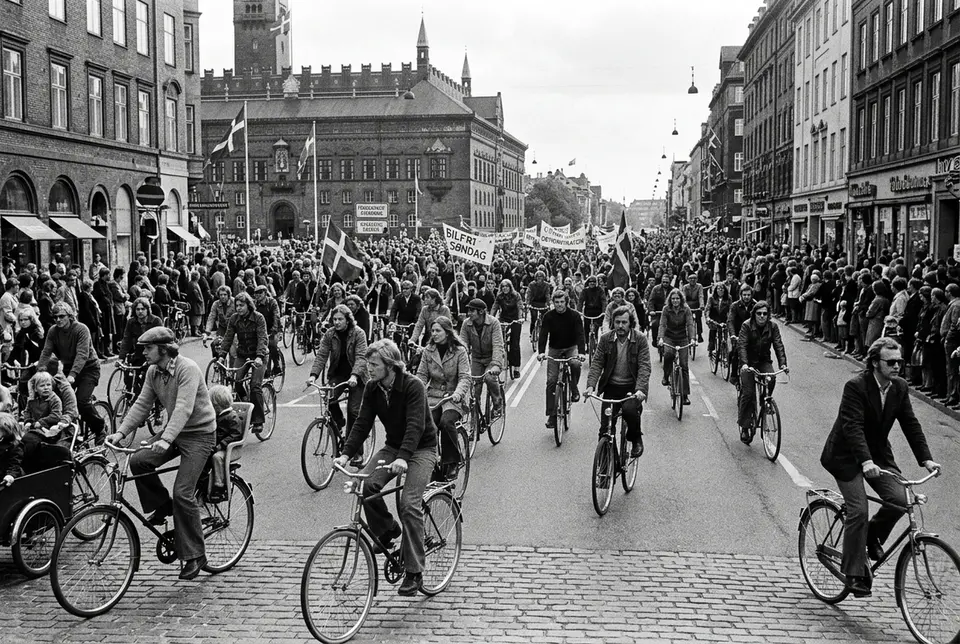
The history of cycling in Copenhagen is the single best explanation I know for why the city feels the way it does today, and I’d argue it matters more than any landmark on a sightseeing list. This wasn’t an accident of geography or a lucky flat landscape. It was a series of deliberate political choices, starting in the 1970s, that could have gone the other way and very nearly did. My guide to cycling in Copenhagen covers what that history actually produced, if you want the present-day picture alongside this backstory.
When Did Cycling Actually Start in Copenhagen?
Bicycles became a mainstream mode of transport here well before the car did, starting in the late 1800s and early 1900s when bikes were simply the affordable, practical way to get around a growing city. I’d call this the quiet first chapter, important mostly because it meant cycling was never a foreign habit the city had to import later, it was already woven into daily life decades before anyone had to defend it against car traffic.
What Changed When Cars Became Popular After World War II?
Cycling’s share of daily trips dropped sharply through the 1950s and 60s as car ownership rose and city planning followed the same car-first pattern common across most of Europe and North America at the time. I’d say this is the period that could have ended Copenhagen’s cycling story for good, with wider roads and more parking steadily squeezing bike lanes out of the picture the same way it happened almost everywhere else.
How Did the 1973 Oil Crisis Change the City’s Direction?
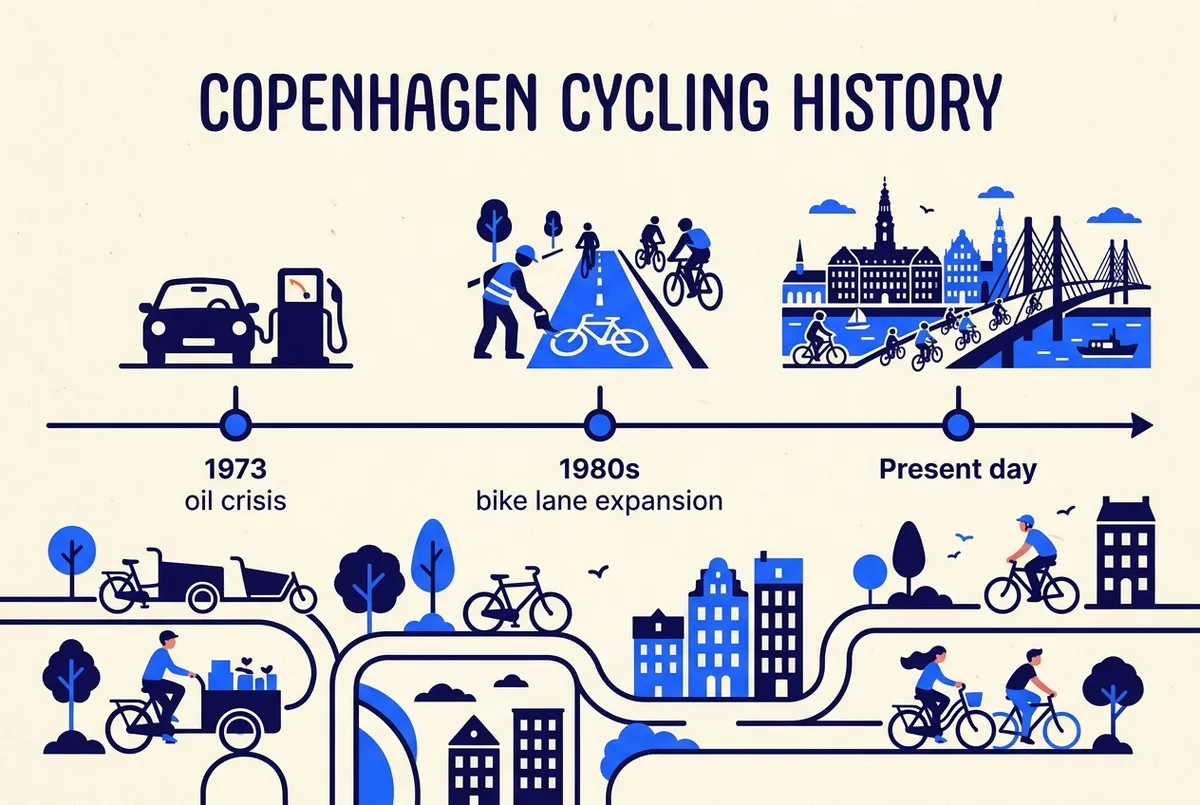
The 1973 oil crisis hit car-dependent cities hard, and Denmark responded with car-free Sundays and a real public reckoning with how dependent the country had become on imported oil for daily transport. I’d point to this moment as the actual turning point, not because the crisis itself built any bike lanes, but because it gave cycling advocates and planners the political opening to argue that the car-first path wasn’t inevitable after all.
Why Didn’t the City Just Go Back to Cars Once the Crisis Passed?
Because the public pressure the crisis created turned into organized political demand that outlasted the fuel shortage itself, with cycling advocacy groups pushing hard through the late 1970s and into the 1980s for permanent infrastructure rather than temporary emergency measures. I’d call this the part most other cities got wrong in similar moments: Copenhagen’s planners treated the crisis as a reason to build differently going forward, not just a temporary inconvenience to wait out before returning to business as usual.
What Actually Got Built in the Decades That Followed?
Physically separated cycle tracks expanded steadily through the 1980s and 1990s, moving bikes off shared roads and onto their own dedicated lanes raised above car traffic, a design choice that’s still the backbone of the system today. I’d highlight this as the single most important engineering decision in the whole story, since separating bikes from cars by curb height rather than just paint is what actually made cycling feel safe enough for ordinary people, not just confident commuters.
How Did City Planning Keep Up With Growing Bike Traffic?
Planners kept widening and connecting lanes as ridership grew, eventually building dedicated “bicycle superhighways” linking the city center to surrounding suburbs for longer commutes, along with landmark bridges built specifically for bikes and pedestrians rather than retrofitted from car infrastructure. I’d call this an unusually disciplined, decades-long commitment, since most cities struggle to sustain any single transport policy for that long without it getting watered down by the next administration.
Did Politics Ever Threaten to Reverse This Direction?
Yes, periodically, and I wouldn’t pretend the commitment was ever universal or guaranteed. Debates over road space, parking and budget priorities have resurfaced repeatedly over the decades, the same arguments any car-heavy interest group raises elsewhere. What’s genuinely different here is that cycling consistently won enough of those arguments to keep expanding rather than stalling out, largely because the public constituency for it grew too large and too habituated to reverse easily.
Is This History the Reason Copenhagen Still Leads Today?
I think it’s the main reason, more than climate or terrain alone. Plenty of flat, temperate cities never built anything close to this system, which tells me the infrastructure and political follow-through mattered more than geography ever did. The history of cycling in Copenhagen is really a case study in sustained policy, not luck, and that’s exactly why it’s hard for other cities to copy quickly even when they genuinely want to.
Were There Specific Leaders or Groups Behind This Shift?
Organized cycling advocacy groups and sympathetic city planners drove most of the sustained pressure, rather than any single politician or iconic figure getting sole credit. I’d actually find that reassuring as a model, since it suggests this kind of change comes from persistent, organized civic pressure over years rather than depending on one visionary mayor who might not be replaced by someone equally committed. Danish cycling federations kept the issue alive through multiple political cycles, which is arguably harder to pull off than winning any single policy fight.
How Does This History Compare to Other Famous Cycling Cities?
Amsterdam followed a broadly similar path, also driven by 1970s oil crisis pressure and traffic safety campaigns after a wave of child cycling deaths sparked public outrage there. I’d say the two cities are often lumped together for good reason, since both made the same underlying bet at roughly the same moment: that separated infrastructure, not just painted lanes, was worth the sustained political cost. Where I’d draw a distinction is scale of ridership, Copenhagen’s share of daily trips by bike has stayed remarkably high specifically because the city kept building bicycle superhighways long after the original crisis-era momentum faded elsewhere.
My Honest Take
I’d tell any visitor that understanding this history changes how you experience the city, even in a single afternoon. Once you know the lanes you’re riding exist because of a deliberate 50-year choice rather than a modern trend, the whole system reads differently, less like a nice amenity and more like a genuine civic achievement worth noticing. If you want to see the everyday result of all this planning, my guide to Copenhagen’s bike lanes, bridges and rules covers exactly how the modern system works on the ground.
How Does This History Show Up in the City’s Culture Today?
It shows up constantly, in ways that go well beyond infrastructure alone. My Copenhagen cycle chic guide covers the everyday style culture this history enabled, since riding in regular clothes only works once the infrastructure makes it safe and normal to do. The same decades of planning also made it possible for Copenhagen to host events like the ones covered in my guide to cycling races and events in Copenhagen, including the 2022 Tour de France Grand Depart.
What Should You Actually Do With This History as a Visitor?
Honestly, just notice it while you ride rather than treat it as background reading. My cycling tips for first-time visitors guide covers the practical etiquette you’ll actually use, and I’d argue the two pieces work best together: the history explains why the system exists, and the etiquette guide gets you comfortable using it within your first hour in the city.
Frequently Asked Questions
Was Copenhagen always considered a leading cycling city?
No, its cycling share dropped significantly during the mid-20th century car boom before the 1970s oil crisis triggered the deliberate policy shift that rebuilt it.
Did other Danish cities follow Copenhagen’s lead on cycling infrastructure?
Yes, to varying degrees, with several other Danish cities adopting similar protected lane designs, though Copenhagen remains the most cited international example.
How long did it take to build the current bike lane network?
Decades. The core separated lane system expanded steadily from the late 1970s through the 1990s and 2000s, with bicycle superhighways added more recently.
Is Copenhagen’s cycling history connected to its broader environmental reputation?
Yes, the two reinforce each other, with the city’s low-emission daily transport pattern now cited as part of its wider sustainability reputation, though the original 1970s push was driven by oil dependence rather than climate policy.
Did Copenhagen’s cycling rate ever dip again after the 1970s recovery?
There have been smaller fluctuations tied to weather, fuel prices and shifting demographics over the decades, but nothing close to the sustained mid-century decline the city reversed in the first place.
For more on the global event that first triggered this policy shift, the 1973 oil crisis on Wikipedia covers the broader context behind Denmark’s response.
Want to experience the result of this history firsthand? The Copenhagen Highlights Bike Tour rides through the same city center this infrastructure was built to serve, with a local guide to fill in the details along the way.
explore every copenhagen bike tour and ticket option →