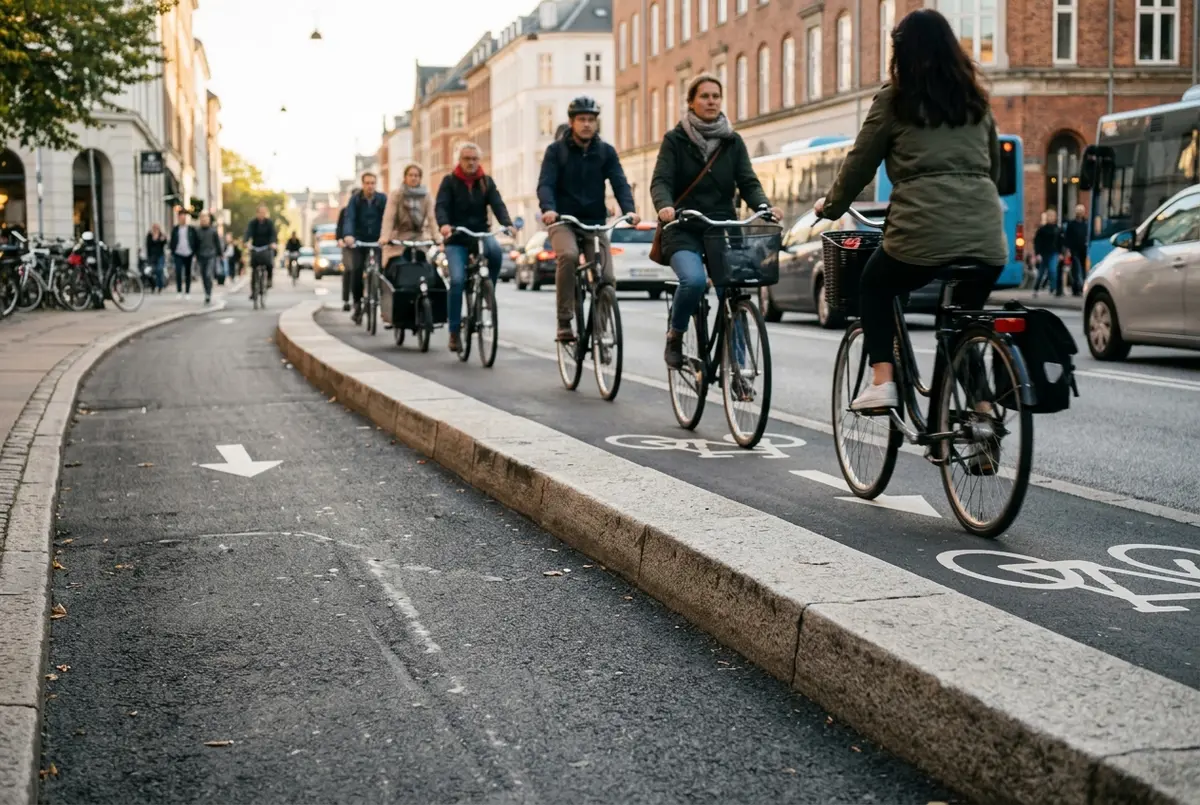
Copenhagen bike lanes follow a design most visitors have never actually ridden on before: raised a curb’s height above the road, physically separated from car traffic rather than just marked with paint, and connected by dedicated bridges that exist purely for bikes and pedestrians. Here is what I would tell you honestly before your first ride: the lanes themselves are easy once you see them, but the unwritten right of way rules are where first-time visitors actually stumble. This guide covers the physical infrastructure, the bridges worth knowing by name, and the handful of rules that keep traffic here moving as smoothly as it does.
What Makes Copenhagen’s Bike Lanes Physically Different From a Painted Lane?
The height difference is the whole story. A Copenhagen cycle track usually sits on its own raised curb between the sidewalk and the road, which means a car drifting out of its lane physically cannot enter the bike lane the way it could cross a painted line. I would call this the single biggest reason cycling here feels calmer than in a city where bikes share a lane with moving traffic. The separation is not a suggestion. It is concrete.
Which Bike Bridges Are Actually Worth Knowing by Name?
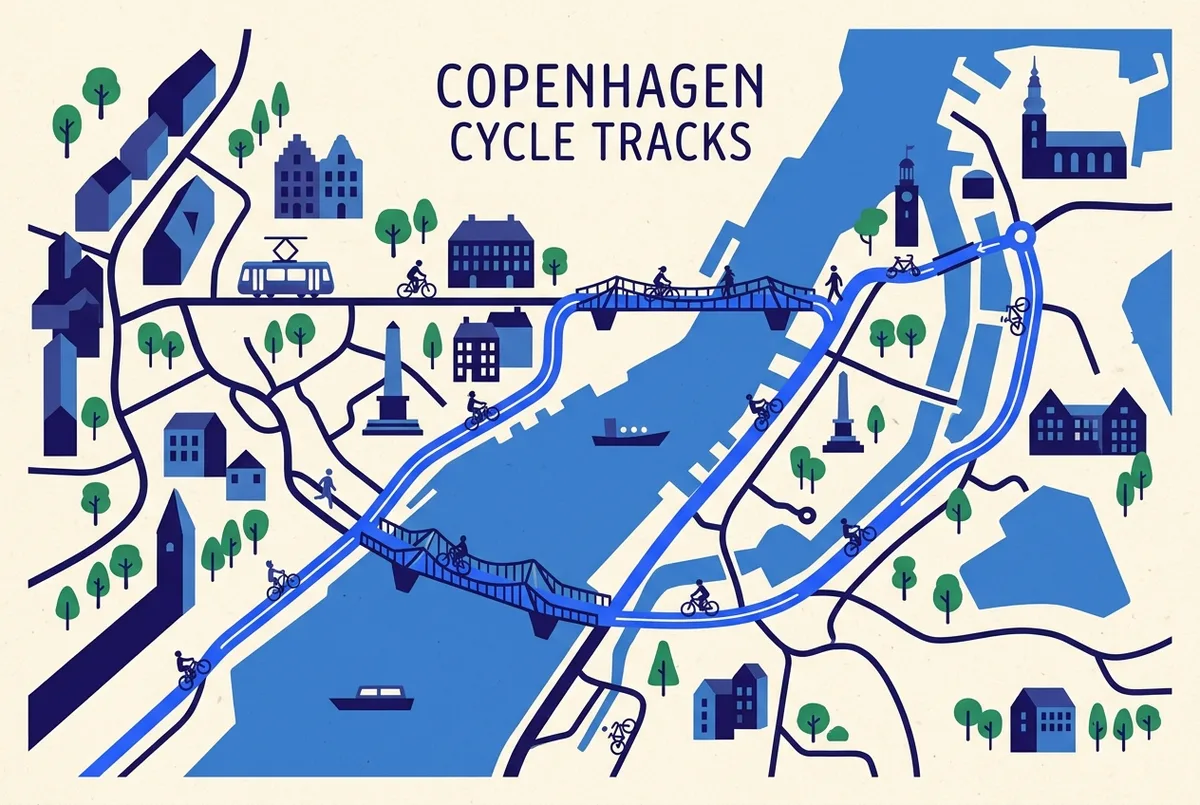
Cykelslangen, the orange elevated bike bridge winding above the harbor near Fisketorvet, and Bryggebroen, the pedestrian and bike bridge connecting Islands Brygge to Vesterbro, are the two most useful to know before you ride. I would route a sightseeing day through at least one of these on purpose, since both offer a genuinely different vantage point over the harbor than anything you would see from a street-level lane. They are also functional shortcuts, not just scenic detours, which is part of why locals use them constantly rather than treating them as tourist landmarks.
Do Cyclists Actually Get Priority at Junctions Here?
Often, yes, more than visitors expect coming from almost anywhere else. Many junctions give cyclists a dedicated signal phase or a head start ahead of turning cars, specifically to reduce the right hook collision that happens when a car turns across a bike lane. I would still make eye contact with any driver signaling a turn near you regardless of whose priority it technically is. The rule protects you legally. It does not protect you physically if a driver is not paying attention.
What Are the Basic Right of Way Rules a Visitor Should Actually Know?
Keep right unless passing, signal clearly before you turn or stop, and never brake suddenly in the middle of a lane without warning the rider behind you. I would add one more that catches almost every first-time rider off guard: pedestrians stepping off a curb into a bike lane without looking is common enough that you should ride expecting it, especially near bus stops and major crossings, rather than assuming the lane is yours alone.
How Do You Signal and Stop Correctly in a Busy Lane?
Stick your arm straight out in the direction you are turning well before the turn itself, and move toward the edge of the lane before you actually slow down, never stop dead in the middle. I would practice this on a quiet side street before attempting it in a busy central stretch, since the gap between knowing the rule and executing it smoothly under real traffic takes a few minutes to click for most first-time riders.
What’s the Deal With Bike Racks and Parking Here?
Dedicated bike racks are everywhere near stations, shops and major intersections, and locking a bike to anything other than a proper rack, a random railing or a lamppost, is generally frowned on and sometimes against local rules outright. I would use a marked rack even if it means walking an extra minute, both out of courtesy and because racks tend to sit in better lit, more watched spots than a random street pole. Train stations usually have the largest racks, often multi level, and finding a free spot during a weekday rush can take a minute of circling. I would arrive a few minutes earlier than you think you need to if you are parking near a station at peak commuting hours, since the easiest spots fill first.
How Do Bike Lanes Handle Multiple Lanes of Cyclists at Once?
On the busiest routes into the center, the cycle track itself splits into a faster overtaking lane and a slower cruising lane, almost exactly like a road does for cars. I would treat the right side as the default and only move left briefly to pass, then return right immediately afterward. Riding two abreast while chatting, which feels harmless on a quiet street, genuinely blocks a commuter route during rush hour, and locals will not hesitate to ring a bell or call out if you are holding up the lane without realizing it.
Does Understanding This Infrastructure Actually Make a First Ride Less Stressful?
Genuinely, yes. My cycling tips for first-time visitors guide builds directly on everything above with a practical checklist for your actual first few minutes on a rented bike. I would read that one next if this page answered the what and why but you still want the practical how before you ride.
Why Does This Infrastructure Exist in the First Place?
It was not inevitable. My history of cycling in Copenhagen guide traces the decades of deliberate planning decisions behind the lanes you are riding on, starting with a 1970s oil crisis that forced the city to rethink car-first streets. I would call that page essential reading for anyone who wants the full context rather than just the rules.
Do These Rules Change During Organized Rides or Events?
Sometimes, yes. My cycling events in Copenhagen guide covers organized races and festivals that temporarily close or reroute certain lanes. I would check that calendar against your travel dates if a specific route matters to your plans, since a normally quiet bridge can turn into a packed event course with little warning otherwise.
Is Any of This Reason Enough on Its Own to Visit Copenhagen?
For some travelers, genuinely yes. My is Copenhagen worth visiting guide weighs the cycling-city case honestly against real costs, since infrastructure this good is a real draw but not a free trip. I would treat that page as the honest gut check before you build an entire itinerary around cycling alone.
Is There a Recognizable Style to How People Ride Here?
Yes, and it ties directly into how relaxed the infrastructure makes everyday cycling feel. My Copenhagen cycle chic guide covers how ordinary commuting here turned into a widely photographed aesthetic. I would notice this yourself within minutes of your first ride: nobody is dressed for athletic performance, because the lanes remove the need for it.
Should You Still Wear a Helmet Given How Safe This Infrastructure Is?
I would, even though the lanes are genuinely well designed. My helmet laws and safety guide covers the legal picture for adults and children along with correct bike fit on a rental frame. Good infrastructure lowers your risk. It does not remove it entirely, and a helmet is a small cost against an unfamiliar frame in unfamiliar traffic.
How I’d Actually Approach Riding Here as a First-Timer
Spend your first five minutes on a quiet side lane getting a feel for the bike before merging onto a busier route, and treat every junction as though a driver might not see you even when the signal says you have priority. I would not try to master every rule in this guide before your first ride. Learn the big three: stay right, signal early, never stop mid-lane, and let the rest come naturally once you are actually moving. Most of what makes Copenhagen’s system work is observation and patience rather than memorized rules, and both come quickly once you are a few minutes into an actual ride.
Frequently Asked Questions
Can I ride a rental bike on any street in central Copenhagen?
Most central streets have a dedicated cycle track, and where one is missing, cyclists typically share a quieter side street rather than a major road, so you are rarely forced into fast car traffic.
Do pedestrians and cyclists share the same bridges here?
On bridges like Bryggebroen, yes, with separate marked sides for each, so stay on the cycling side rather than drifting into the pedestrian path.
Is it rude to ride slowly in a Copenhagen bike lane?
Riding well below the flow of traffic without pulling to the side can frustrate commuters behind you, so keep right if you want to go slower than the main stream.
Are electric bikes allowed in the same lanes as regular bikes?
Yes, standard e-bikes use the same cycle tracks as regular bikes, though riders should still keep to a reasonable speed similar to the surrounding traffic.
For a broader look at how cities design and build cycling networks like this one, the Cycling infrastructure Wikipedia page covers the general principles behind what you will see on the ground here.
Want to experience these lanes without worrying about any of the above? My cycling in Copenhagen guide is the wider starting point, or skip straight to a guided ride with the Copenhagen Highlights Bike Tour from EUR 53.
see every copenhagen bike tour route on one page →